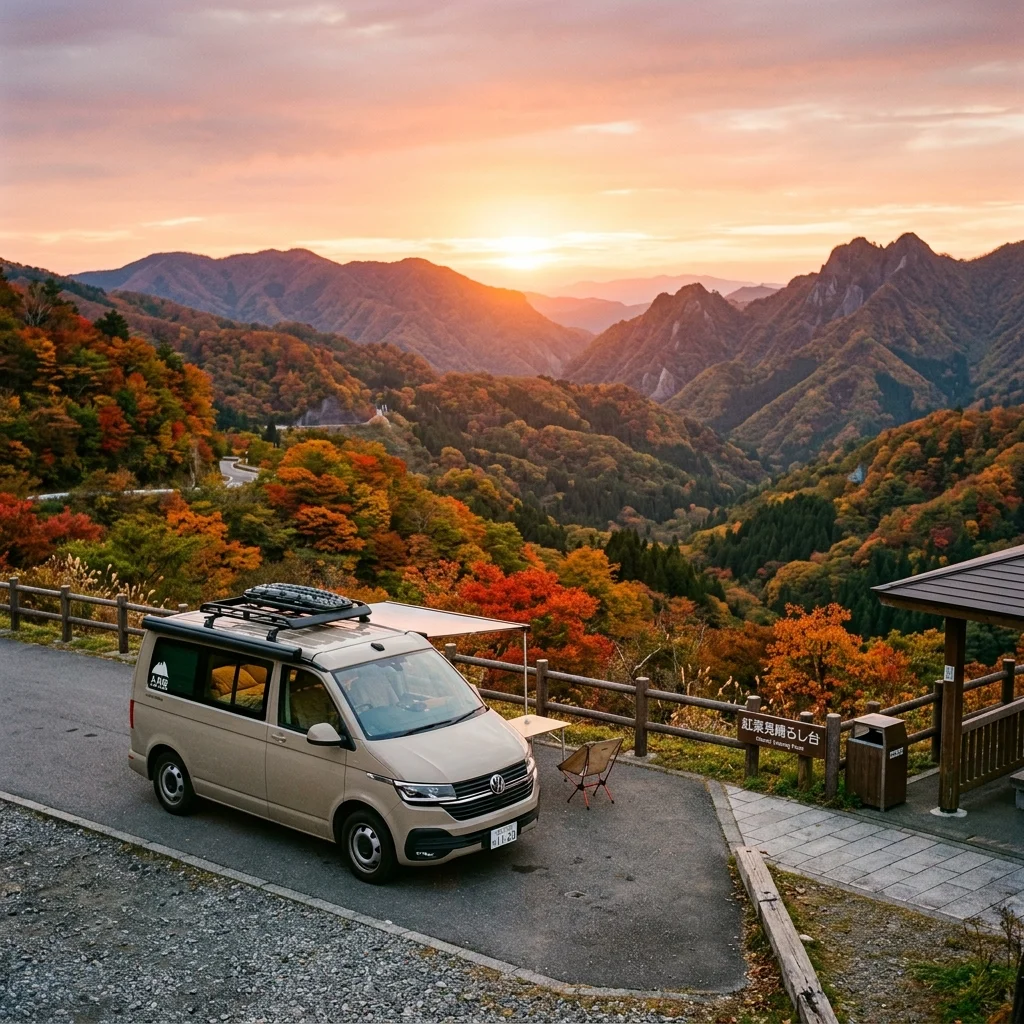
Why a Campervan Is the Best Way to See Rural Japan
Japan's rail network is world-famous, and for city-hopping between Tokyo, Kyoto, and Osaka it's unbeatable. But the Japan that stays with you — misty caldera roads, fishing villages, mountain onsen towns, rice terraces at golden hour — mostly sits far from any station. That's the Japan a campervan unlocks.
A campervan trip in Japan combines transport and accommodation in one. You wake up beside a lake in Hokkaido or above a steaming hot-spring valley in Kyushu, make coffee in your own kitchen, and drive on when you feel like it. No hotel check-in deadlines, no luggage lockers, no timetables. And because Japan has one of the world's densest networks of michi-no-eki (roadside stations) — over 1,200 of them, with free parking, clean 24-hour toilets, and local food markets — the infrastructure for van travel is arguably better here than anywhere else in Asia.
Renting is straightforward too. Campervan rental companies operate near all major airports, most offer English booking, and — this surprises many visitors — the majority of rental campervans can be driven on an ordinary car license. There is one piece of paperwork, however, that stops more European travelers at the rental counter than anything else. Let's start there.
License Requirements: The Rule That Catches Europeans Out
First, the good news. Most campervans in Japan's rental fleets are built on light or standard vehicle platforms. If you're licensed to drive a normal car, you can drive most rental campervans — no truck or special license class is needed. (Always confirm the license class with your rental company when booking, especially for the largest cab-over motorhomes.)
The critical question is not your license class — it's your license's country of issue. Japan recognizes foreign drivers under two mutually exclusive systems, and campervans follow exactly the same rules as rental cars:
- International Driving Permit (1949 Geneva Convention) — If your license was issued in the USA, UK, Australia, Canada, the Netherlands, Italy, Spain, Austria, or another 1949 Geneva Convention country, bring a 1949-format IDP from your home country's issuing body, plus your original license.
- Official Japanese translation (Article 107-2, Road Traffic Act) — If your license was issued in Switzerland, Germany, France, Belgium, Monaco, or Taiwan, an IDP is not valid in Japan. Switzerland, Germany, and Taiwan follow the 1968 Vienna Convention, which Japan never ratified. France, Belgium, and Monaco are also parties to the 1949 Geneva Convention that Japan does recognize, but they now issue their IDPs under that same newer Vienna format instead, so Japan doesn't accept those either. Instead, you must carry an official Japanese translation of your license together with the original license itself.
Why this matters at the counter: rental staff are legally required to check your documents. Every season, Swiss, German, and French travelers arrive with an IDP their local automobile club happily issued — and are refused the keys, because that IDP has no legal force in Japan. Check which system applies to you before you book the van. Full country-by-country details: Can I Drive in Japan? — The Complete Guide.
If you need the translation, you have several legitimate routes. JAF (Japan Automobile Federation) issues it, but takes applications only online from within Japan, in Japanese, and delivers only to Japanese addresses. Or you can apply online with JDLTC from anywhere, in English, and receive your translation as a PDF by email — from €99 / CHF 99 / NT$3,290 Standard (3–4 weeks), €139 / CHF 139 / NT$4,490 Express (5–7 days), or €179 / CHF 179 / NT$5,790 Rush (1–3 business days as a guideline). Book your van with the PDF before you fly, then drive with JAF's paper original, which we deliver to your hotel or even the rental desk in Japan (+€10 / CHF 10 / NT$350), from the day after your translation is ready. The translation lets you drive in Japan for up to one year from your date of entry, or until your own license expires if sooner.
📦 Some rental companies cannot accept parcels, so please choose your hotel for delivery whenever possible.
Need an official license translation for your campervan trip?
Apply online in 5 minutes from anywhere in the world. Receive the PDF by email to book your van before you fly.
Start Application — From €99 / CHF 99 / NT$3,290 →What Does Campervan Rental Cost in Japan?
Per-day rates vary widely with vehicle size, season, and rental length, so treat any single number with caution. As a general picture:
- Vehicle size drives the price. Compact campers built on light-vehicle (kei) platforms sit at the affordable end; mid-size van conversions cost more; large cab-over motorhomes with full living quarters are the premium tier.
- Season matters enormously. Cherry blossom season (late March–April), Golden Week (early May), the August summer holidays, and autumn foliage weekends command peak rates. Shoulder seasons can be dramatically cheaper.
- Longer rentals reward you. Most companies discount weekly and multi-week bookings, which suits campervan travel — this is not a vehicle you rent for a day.
The comparison that matters is not campervan vs. rental car — it's campervan vs. rental car plus hotels. Once you fold accommodation into the math, a campervan is often the most economical way for two or more people to spend a week or two in rural Japan, especially since overnight rest at michi-no-eki costs nothing. Budget separately for expressway tolls, fuel, and the occasional campground or onsen visit.
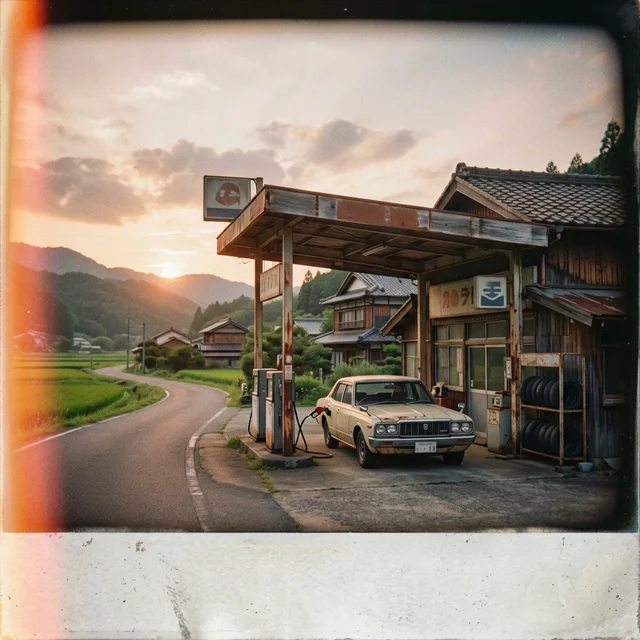
Two Routes That Show Japan at Its Best
🌋 Kyushu — Volcanoes, Onsen & Year-Round Driving
Japan's southwestern island is the country's most underrated road trip destination, and its mild climate makes it drivable in every season. From Fukuoka, loop south through the Aso caldera — one of the largest volcanic calderas on Earth, with grassland roads that feel more like Mongolia than Japan — then east to Beppu and Yufuin, the hot-spring capitals, where you can soak in an outdoor bath while your van waits outside. Rural Kyushu is famously welcoming to van travelers, and its dense network of roadside stations makes overnight logistics effortless. For a detailed 5-day itinerary based on a real trip, see our Kyushu campervan road trip guide.
🏔️ Hokkaido — Big Skies and Empty Roads
Japan's northern island is its classic campervan country: wide roads, little traffic, and vast landscapes that reward slow travel. Aim for June to September, when the lavender fields of Furano and Biei are in bloom and the rest of Japan is sweltering. Push further east and the Shiretoko Peninsula — a UNESCO World Heritage site — delivers dramatic coastline, brown bears, and drives you'll remember for a lifetime.
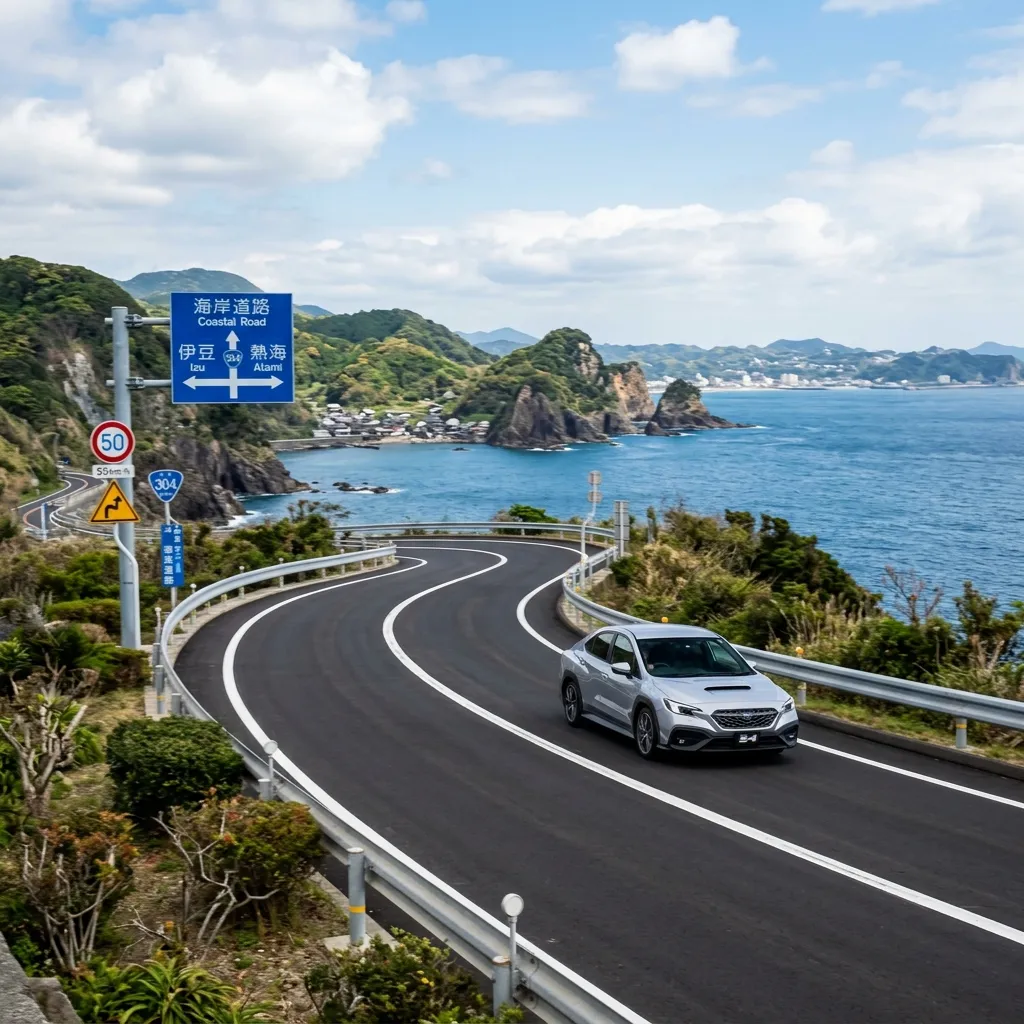
Overnight Parking: Michi-no-Eki Rules & Van-Life Etiquette
Japan's roadside stations are the backbone of any campervan itinerary, but they come with an unwritten social contract. Michi-no-eki are rest stops, not campsites — overnight parking is tolerated as a road-safety measure (a tired driver resting is safer than a tired driver driving), and keeping that tolerance alive depends on every traveler behaving well:
- Rest, don't camp. No awnings, tables, chairs, or barbecues in the parking lot. Sleep inside the van.
- Keep quiet at night. Avoid long engine idling — it's noisy, and in many municipalities it's restricted.
- Take your trash with you. Station bins are for goods purchased there, not for travel waste.
- Give back. Buy breakfast, local produce, or souvenirs from the station's market. It keeps the system welcoming for the next traveler.
- Park considerately. Use ordinary spaces, leave spots near the entrance for short-stay visitors, and never occupy disabled bays.
When you want to properly camp — electricity hookups, waste disposal, showers, a table under the stars — use a designated RV park or auto campground. Japan has a growing network of both, and mixing free michi-no-eki nights with the occasional paid campground (and a nightly onsen — most hot-spring towns have public baths for a few hundred yen) is the rhythm most experienced van travelers settle into.
Two final rules of the road: Japan drives on the left, and alcohol tolerance is effectively zero — a breath alcohol level of just 0.15 mg/L already qualifies as drunk driving under Japanese law. In a vehicle that carries its own fridge, the rule is simple: once you've parked for the night and opened a drink, you're parked until morning.
Renting in Kyushu: VAN TRIP JAPAN
If Kyushu is on your route, our sister service VAN TRIP JAPAN has been renting campervans from its Fukuoka base since 2023. Run by the same Fukuoka-registered company behind JDLTC (Camjyo Inc.), it's built by people who actually travel Kyushu by van — which shows in details like camping equipment included for JDLTC customers. It's one option among several good ones; whichever company you choose, the license rules above apply identically.
Frequently Asked Questions
Q: Do I need a special license to rent a campervan in Japan?
A: In most cases, no. The majority of rental campervans are built on light or standard vehicle platforms that an ordinary car license covers. Always confirm the required license class with the rental company when you book, but if you're legally allowed to drive a normal car in Japan, most rental campervans are open to you.
Q: Can I rent a campervan in Japan with a Swiss, German, French, Belgian, Monegasque, or Taiwanese license?
A: Yes — but not with an International Driving Permit. Japan only recognizes IDPs issued under the 1949 Geneva Convention, and Switzerland, Germany, and Taiwan follow the 1968 Vienna Convention instead. France, Belgium, and Monaco are also parties to the 1949 Geneva Convention, but now issue their IDPs under that same newer Vienna format — which Japan doesn't accept either — so all six license-issuing countries and regions need the same solution. Under Article 107-2 of Japan's Road Traffic Act, you need an official Japanese translation of your license, carried together with your original. The same rule applies to campervans as to any rental car. Apply for a translation here →
Q: Can I park a campervan overnight anywhere in Japan?
A: No. Michi-no-eki (roadside stations) tolerate overnight rest, but they are rest stops, not campsites: keep quiet at night, don't set out tables or awnings, take your trash with you, and support the station's shop. For full camping with hookups, use designated RV parks or auto campgrounds.
Q: How much does it cost to rent a campervan in Japan?
A: Per-day rates vary widely by vehicle size, season, and rental length. Compact vans sit at the affordable end, large cab-over motorhomes cost considerably more, and peak periods like cherry blossom season, Golden Week, and the summer holidays command premium rates. Because the vehicle doubles as your accommodation, the total trip cost often compares favorably with a car-plus-hotels itinerary.
Q: Is it difficult to drive a campervan in Japan?
A: Easier than most first-timers expect. Japan drives on the left, roads are well maintained, and drivers are courteous. Compact campervans handle much like a regular van; the main adjustments are height and length on narrow rural roads and in parking structures. And remember: alcohol rules are effectively zero tolerance — 0.15 mg/L of breath alcohol already qualifies as an offense.
Q: When is the best season for a campervan trip in Japan?
A: It depends on the region. Hokkaido shines from June to September; Kyushu works year-round thanks to its mild climate, with spectacular autumn foliage and spring blossoms. Winter trips are possible but require winter tires and cold-weather preparation.
One document stands between you and the open road
Apply for your official license translation online before your trip. PDF by email to book your van, then JAF's paper original to drive with, delivered to your hotel or rental desk in Japan (+€10 / CHF 10 / NT$350).
Start Application →