Short answer: yes, you can drive in Japan on a Swiss licence, but not with a Swiss International Driving Permit. You carry your Swiss licence together with an official Japanese translation of it.
| Question | Answer | Source |
|---|---|---|
| Is a Swiss IDP valid in Japan? | No. Switzerland signed the 1949 Geneva Convention but never ratified it. The Swiss IDP follows the 1968 convention, which Japan has not signed. | UN Treaty Collection, Swiss Embassy in Japan, TCS |
| What do I carry while driving? | Your Swiss licence and its Japanese translation, together. Visitors must also carry their passport under Japanese immigration law. | JAF, Immigration Services Agency |
| Who issues the translation? | JAF, plus two other bodies designated by Japan's National Public Safety Commission. The National Police Agency also accepts translations by the licence-issuing authority or the country's embassy or consulate in Japan. The Swiss Embassy in Tokyo refers drivers to JAF. | National Police Agency, Swiss Embassy |
| Can I apply from Switzerland? | Not to JAF directly. JAF takes applications online only, from networks inside Japan. Someone in Japan or an agency can apply for you. JDLTC is one such agency. | JAF |
| How long can I drive on it? | Up to one year from the day you land, or until your licence expires if that comes first. For visitors, each new landing starts a new year. The three-month rule applies only to people on Japan's resident register. | National Police Agency, JAF |
| Which copy do I drive with? | JAF's paper translation, printed in Japan. We email you the PDF before you fly so you can book your car, and deliver the paper original to your hotel or rental counter in Japan. | JAF |
| What does it cost? | JAF's fee is ¥6,000 (tax-exempt) plus ¥20 per printed page. Through JDLTC: CHF 99 standard (3–4 weeks), CHF 139 express (5–7 days), CHF 179 rush (1–3 business days, estimated). Paper original delivered in Japan: CHF 10. | JAF, JDLTC prices |
Checked against the sources above on 2 October 2026.
Read next: Is a Swiss IDP valid in Japan? · Auf Deutsch: Führerausweis übersetzen · En français: permis suisse au Japon
Can I Drive in Japan with My Swiss License?
Yes, but not with an International Driving Permit (IDP). Switzerland is one of six countries and regions whose drivers need an official Japanese translation of their license instead of an IDP.
The full process — what the document is, who issues it, and how to order one before you fly — is covered in our JAF translation guide.
Japan only recognizes IDPs based on the 1949 Geneva Convention on Road Traffic. Switzerland never ratified this convention. Instead, Japan's Road Traffic Law (道路交通法 Article 107-2) specifically allows Swiss license holders to drive legally in Japan with a certified official translation of their license.
If you arrive in Japan with only a Swiss IDP, you will not be able to rent or legally drive a car. The correct document is the official translation — apply before your trip.
About the Swiss Driver's License
The Swiss driver's license (Führerausweis / permis de conduire / licenza di condurre) is issued by the cantonal road traffic offices (Strassenverkehrsamt). Swiss licenses in credit-card format show no expiry date for Category B (passenger cars). Older paper-format licenses remain valid as long as they have not expired.
The relevant category for renting a car in Japan is Category B (Kat. B), which covers passenger vehicles up to 3,500 kg. If your license shows Kat. B (or B1, BE), you are eligible to rent a standard car in Japan.
Note: The cantonal code on your license (e.g., ZH for Zurich, BE for Bern) does not affect validity. The requirement applies equally to licenses from all Swiss cantons.
What You Need to Drive in Japan
- Your valid Swiss driver's license (Führerausweis), must not be expired
- The official Japanese translation, as JAF's paper original printed in Japan
- Both documents must be carried together at all times while driving
- Your passport (required by all rental companies at check-in)
How Long Can I Drive in Japan?
You can drive in Japan for up to 1 year from the day you land, or until your Swiss licence expires if that comes first. The year starts from the landing stamp in your passport, not from the date of the translation.
For visitors, each new landing in Japan starts a new year. The rule that a trip abroad of under three months does not restart the year applies only to people on Japan's resident register (National Police Agency). The same translation can be reused on later trips while your Swiss licence stays valid.
How to Get Your Translation
- Apply online: upload clear photos of the front and back of your Swiss license
- Pay securely: CHF 99 via credit card (Stripe), or CHF 139 / CHF 179 for express or rush
- Receive the PDF by email: standard 3–4 weeks, express 5–7 days, rush 1–3 business days (estimated)
- Book your car with the PDF, then drive with the paper original. We deliver it to your hotel or rental counter in Japan for CHF 10, from the day after your translation is ready.
Apply from Switzerland before your departure. There is no need to wait until you arrive in Japan. Standard processing takes 3–4 weeks, so apply at least a month before your travel date. If you are short on time, express and rush are faster.
Ready to drive in Japan?
Book your car with the PDF before you fly, then drive with JAF's paper original, which we deliver to your hotel or rental counter in Japan for CHF 10.
Apply Now — CHF 99 →Swiss Drivers in Japan — Key Differences
| Rule | Switzerland | Japan |
|---|---|---|
| Traffic side | Right | Left |
| Steering wheel | Left | Right |
| Max highway speed | 120 km/h | 80–120 km/h |
| Blood alcohol limit | 0.05% | 0.03% |
| Highway fees | Annual vignette (CHF 40) | Per-route toll |
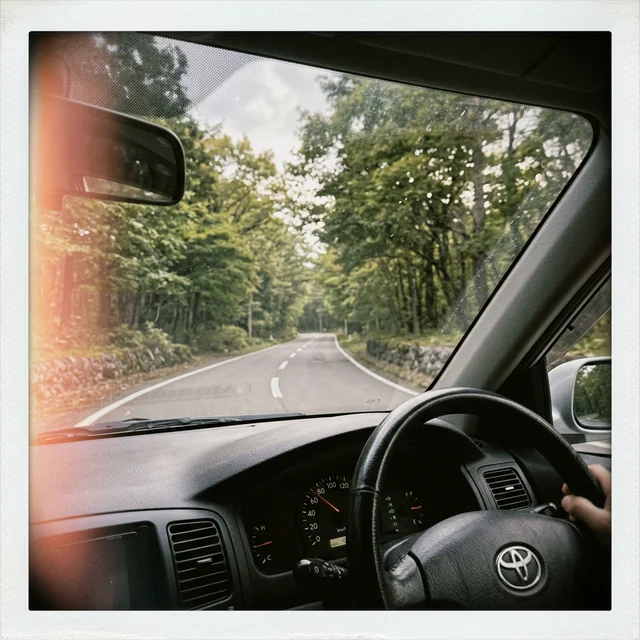
| Turn signal position | Left of steering column | Right of steering column |
The most important adjustment is driving on the left. Most drivers adapt within the first 30–60 minutes. Be especially careful at intersections and when turning. Note also that the turn signal lever in Japanese cars is on the right side of the steering column — the opposite of Swiss cars. You may accidentally activate the windscreen wipers at first. This is completely normal.
Renting a Car in Japan as a Swiss Driver
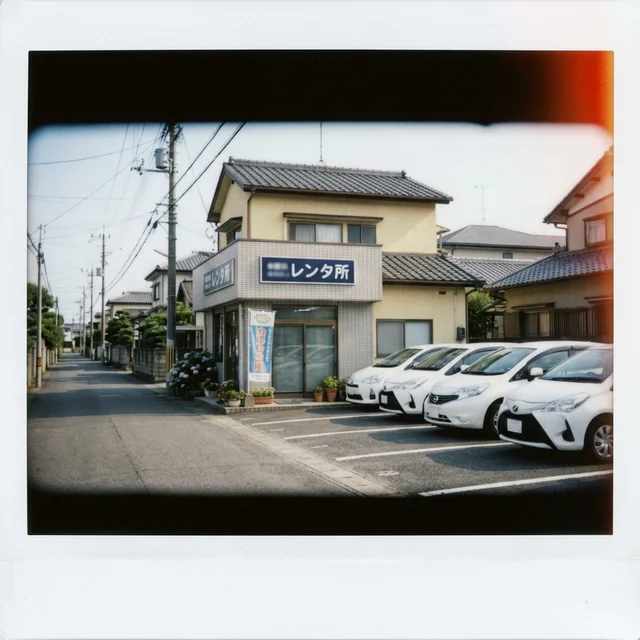
Present your Swiss license along with JAF's paper original of the official translation at the rental counter. Staff will photograph both documents. Major rental companies — Toyota Rent a Car, Nippon Rent-A-Car, Times Car Rental, Orix — all accept this combination.
Important: Some smaller local agencies may not be familiar with the official translation system. If this happens, show them the document and explain it is the official equivalent of an IDP for Swiss drivers under Japanese law. In practice, this is rarely an issue at major rental companies.
Most rental cars in Japan are automatic transmission, which differs from Switzerland where manual cars remain common. Compact cars (such as the Toyota Yaris or Honda Fit) are ideal for Japan's narrow city streets.
Car Rental Insurance in Japan
Key insurance terms to understand before you drive:
- CDW (Collision Damage Waiver) is typically included in the base rental price. It reduces your liability in case of damage.
- NOC (Non-Operation Charge) — If the car is damaged and cannot be rented while being repaired, you may be charged ¥20,000–¥50,000. Supplemental insurance covers this.
- Personal accident insurance (PAI) — Optional, approximately ¥500–¥1,000 per day.
- Some Swiss or European credit cards (Visa Infinite, Amex) include rental car insurance. Check your card's terms before relying on it in Japan.
Useful Phrases at the Rental Counter
- "I have an official translation." → JAFの翻訳があります。(JAF no hon'yaku ga arimasu.)
- "Please include an ETC card." → ETCカードをお願いします。(ETC ka-do wo onegai shimasu.)
- "Do you have English GPS?" → 英語のカーナビはありますか?(Eigo no ka-nabi wa arimasu ka?)
- "Full insurance, please." → フル補償でお願いします。(Furu hoshou de onegai shimasu.)
Best Road Trips for Swiss Drivers in Japan
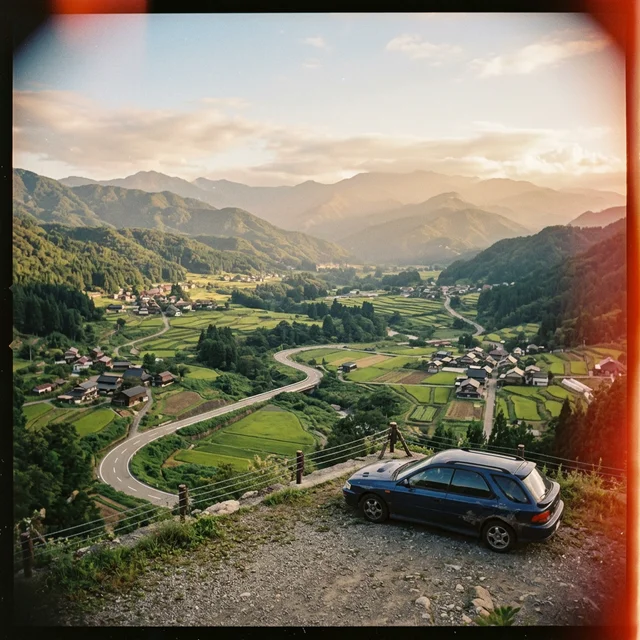
Switzerland is known for mountain scenery and precision — Japan offers both. These routes are particularly popular with Swiss visitors:
- The Japanese Alps — Nagano Prefecture — The Tateyama Kurobe Alpine Route and the roads around Matsumoto offer alpine scenery that Swiss drivers will find familiar. Drive the Norikura Skyline for panoramic mountain views above 2,700m. Best from late May to October.
- Hakuba Valley, Nagano — A skiing and outdoor sports hub surrounded by peaks over 3,000m. The drive from Nagano city to Hakuba (about 60 km) passes through mountain valleys with scenery comparable to the Swiss Bernese Oberland.
- Hokkaido Furano & Biei — Open fields, lavender farms, and wide prairie-like roads in summer. July is peak season. The Blue Pond (青い池) near Biei is a photogenic stop.
- Nikko Mountain Road, Tochigi — UNESCO World Heritage shrines combined with mountain driving. The Irohazaka winding road (48 hairpin bends) is a highlight. About 2 hours from Tokyo.
- Shimanami Kaidō — Inland Sea Islands — A 60 km scenic drive across a chain of islands connected by iconic bridges. The views over the Seto Inland Sea are breathtaking on a clear day.
Highway Tolls in Japan
Unlike Switzerland's annual vignette system (CHF 40 for all highway access), Japan charges per-route tolls for expressways. Costs depend on the distance traveled.
| Route | Approximate Toll |
|---|---|
| Tokyo → Osaka (550 km) | ¥8,000–¥12,000 |
| Tokyo → Mt. Fuji area (100 km) | ¥2,000–¥3,000 |
| Sapporo → Furano (100 km) | ¥2,000–¥3,000 |
Most rental cars include an ETC card reader. Ask your rental company to activate an ETC card for cashless toll payment. Google Maps calculates toll costs when planning routes.
Frequently Asked Questions
Q: I already have an International Driving Permit from Switzerland. Can I use it?
A: No. Japan does not recognize Swiss IDPs. You need the specific official translation document. This applies regardless of which cantonal road traffic office (Strassenverkehrsamt) issued your IDP.
Q: Does the requirement apply to all Swiss cantons?
A: Yes. The requirement applies to all Swiss driving licenses regardless of the issuing canton — Zurich (ZH), Geneva (GE), Vaud (VD), Bern (BE), and all others.
Q: I live abroad but my license was issued in Switzerland. What do I need?
A: What matters is the country that issued your license. If it says "Schweiz / Suisse / Svizzera," you need an official translation.
Q: Does my Swiss license need a Swiss address?
A: No. The address on your license is not relevant for the official translation. What matters is that it was issued in Switzerland and is currently valid.
Q: What about Liechtenstein licenses?
A: Liechtenstein is not on Japan's list of six countries requiring official translations. Liechtenstein drivers should check with a local automobile club about standard IDP requirements for Japan.
Q: What if my rental car breaks down?
A: Call JAF roadside assistance at 0570-00-8139. Your rental company will also provide a 24-hour emergency number — save it before you start driving.
Q: Can I drive in Japan in winter?
A: Yes. In snowy regions (Hokkaido, the Alps, Tohoku), rental companies offer studless winter tires as an option (typically ¥1,000–¥2,000 extra per day). Always request these if driving in winter — they are essential on icy mountain roads.
Ready to drive in Japan?
Apply for your Swiss license translation: a PDF by email to book your car, and the paper original delivered in Japan for CHF 10.
Apply Now — CHF 99 →