Swiss category B licences issued to drivers under 70 carry no expiry date. You are handed a card, and it stays valid — no renewal, no reminder letter, nothing to think about for decades.
That habit is exactly what catches Swiss drivers out in Japan. The document you need there does expire, and it expires from a date most people never think to note.
First: Your International Driving Permit Will Not Work
Japan recognises International Driving Permits issued under the 1949 Geneva Convention. Switzerland never joined that convention — it is a party to the 1968 Vienna Convention instead.
So the permit issued by your cantonal Strassenverkehrsamt has no standing in Japan. It is not a matter of a rental clerk being difficult; the document simply is not one Japan recognises.
The TCS does not issue Japanese licence translations either, so that route is closed too.
What Japan requires instead
Japanese law requires an official Japanese translation of your licence, such as the JAF translation, carried together with your original Swiss licence. Neither document works alone.
This holds for every canton. Zürich, Bern, Genève, Ticino, Valais — the licence is Swiss, and that is what the rule follows. The language printed on your card makes no difference.
The Expiry Nobody Warns Swiss Drivers About
Here is the part worth writing down.
Your Swiss licence may never expire. The translation expires one year from your date of entry into Japan.
Not one year from the date it was issued. Not one year from when you paid. One year from the day you land — the date stamped in your passport at immigration.
Two practical consequences:
- Leaving and re-entering Japan restarts the clock. Fly to Seoul for a weekend, come back, and the year runs from the new entry stamp.
- An earlier trip's entry date does not carry over. If you drove in Japan two years ago, the year now runs from your new entry stamp, not from that trip.
Drivers from countries with expiring licences tend to check dates by reflex. Swiss drivers, understandably, do not — which is why this one slips through.
Get It Before You Fly — and Book the Car From Home
Japanese rental companies check documents at the booking stage, not only at pickup. If you cannot show the translation when you reserve, the reservation can be refused.
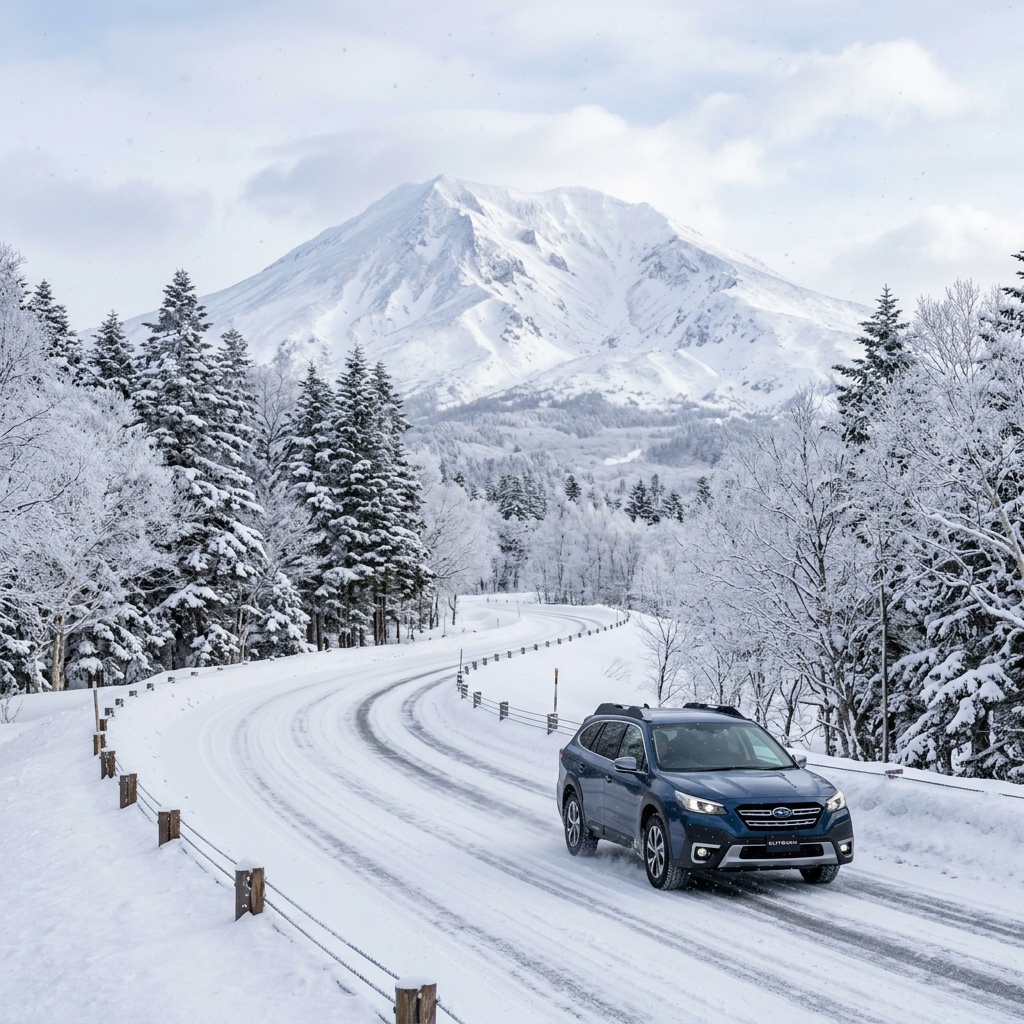
That is a real problem in the two seasons Swiss travellers most often choose. Hokkaido and Nagano powder in January, and the autumn colours in November, both sell rental stock out weeks ahead. Waiting until you land means choosing from what nobody else wanted.
The order that works is: translation first, booking second, flight third.
With JDLTC you upload photos of both sides of your licence, pay in Swiss francs, and receive the official translation as a PDF by email before you leave Switzerland. Use it to book the car from home; you then drive with JAF's paper original, described below.
Services that hand you a collection code instead of a document leave you with nothing to show until you have already landed, which is too late to hold the car you wanted.
The paper original you drive with
To pick up the car and drive, you carry JAF's paper original, printed in Japan, together with your Swiss licence. JDLTC delivers it to your hotel or rental branch in Japan from the day after the translation is ready, for CHF 10 (delivery within Japan only).
What to Carry While Driving
- Your original Swiss licence (Führerausweis / permis de conduire)
- The paper original of the official Japanese translation
- Your passport — rental counters ask for it, and it proves your entry date
Carry the first two together at all times. Police checks and toll booths both ask, and one without the other counts as neither.
Driving in Japan After Switzerland
Swiss drivers adapt faster than most, with three exceptions:
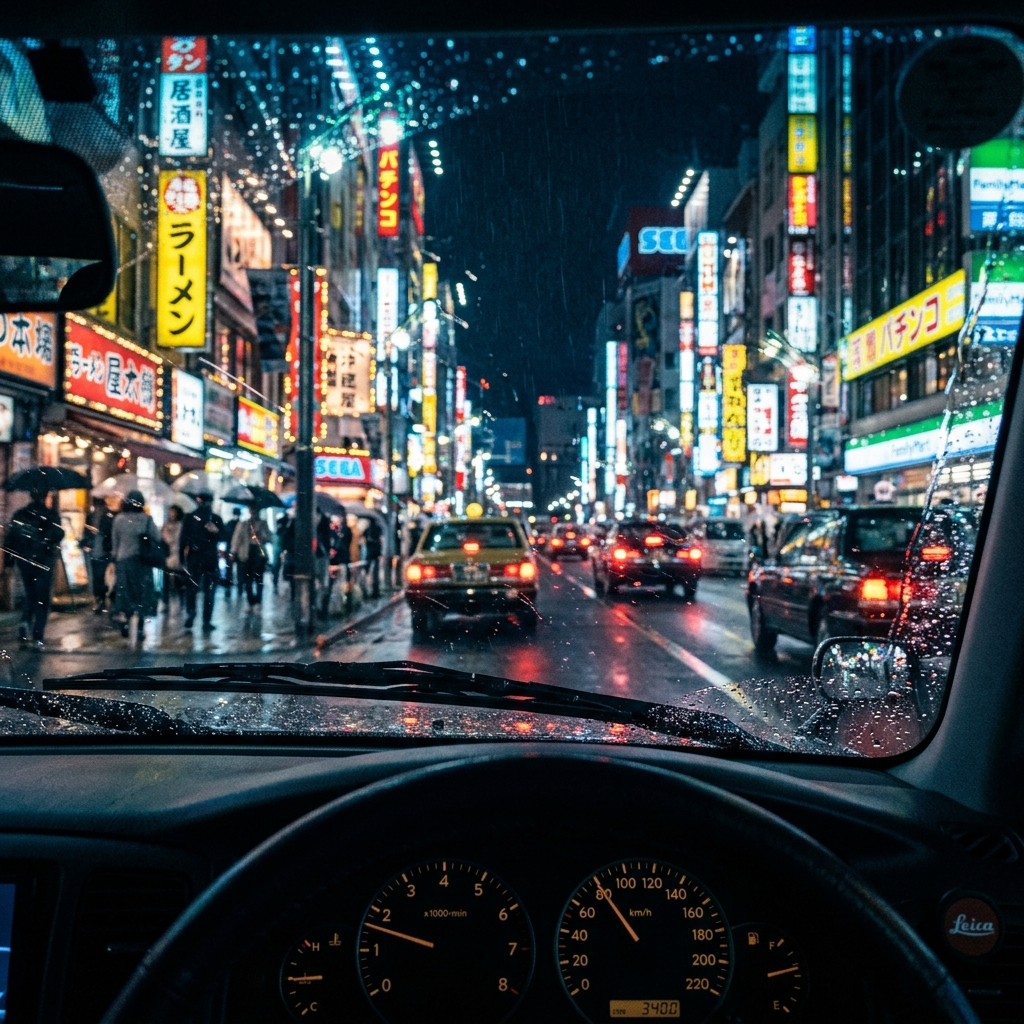
- Left-hand traffic. Mountain roads feel natural quickly. Junctions do not — instinct pulls you to the wrong side when you are tired. Give the first hour to somewhere quiet.
- Speed limits are lower than you expect. Typically 80–100 km/h on expressways and 40–60 km/h on ordinary roads. Enforcement is routine.
- Winter tyres are an option, not a default. In Hokkaido and the Japanese Alps, studless tyres are essential and usually cost extra per day. Confirm them when booking rather than at the counter.
Frequently Asked Questions
Q: My Swiss licence has no expiry date. Is that a problem?
A: No. Category B licences for drivers under 70 are open-ended and Japan accepts them. The translation is what carries a time limit — one year from your entry date.
Q: Does the rule differ by canton?
A: No. Every Swiss licence is treated the same, whichever canton issued it and whichever language it is printed in.
Q: Does the TCS provide this translation?
A: No. The TCS does not issue Japanese licence translations. JAF takes applications only from inside Japan, so to get a JAF translation, Swiss drivers have someone there (an acquaintance, or a service such as JDLTC) apply on their behalf before the trip.
Q: I still have a translation from an earlier trip. Can I reuse it?
A: The year runs from each new entry, not from the trip it was first used on, so the old entry date does not rule it out. Carry JAF's paper original with your licence when you drive.
Q: What about Liechtenstein?
A: Liechtenstein is not on Japan's list of six countries, so the rules differ. Check with your automobile club about the ordinary International Driving Permit route.
Q: My flight is soon. Is it too late?
A: Not necessarily — an expedited option shortens the turnaround considerably. The tighter constraint is usually the rental booking, especially in ski season.
In Short
Switzerland never joined the 1949 Geneva Convention, so your International Driving Permit carries no weight in Japan. What you need is the official Japanese translation of your licence, carried with the original.
And unlike your licence, it does expire — one year from the day you land.